
A person standing beneath a flickering sign is a scene; it isn’t yet a short video idea. To make the prompt useful for motion, decide what changes while the clip plays. A passing train, a turn toward the light, or rain gathering on the lens gives the viewer something to follow.
Build a simple sequence
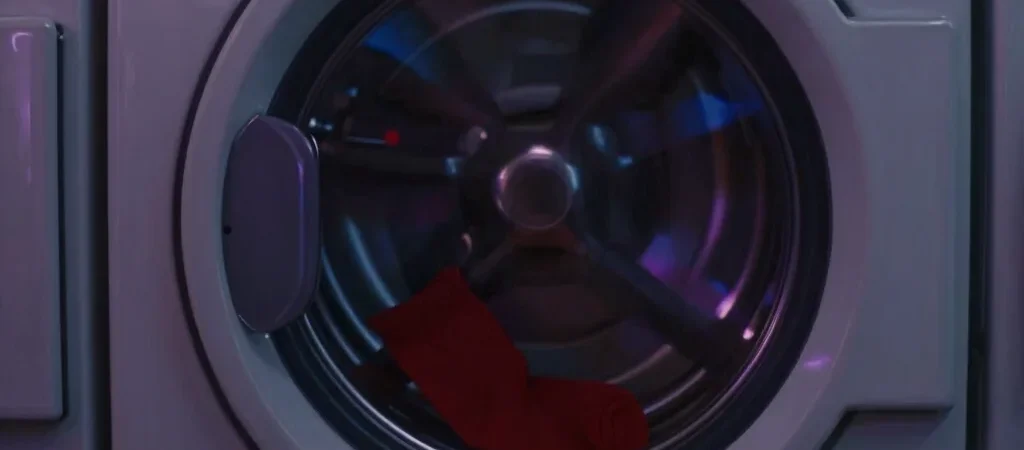
Think in three beats: establish the subject and setting, show one clear action, then land on a final image. For example, open on a quiet laundromat at night, follow a red sock tumbling into view, and end as the spinning washer fills the frame. One legible action is easier to shape than a list of unrelated events.
Choose motion with intent
Camera movement is part of the prompt, not decoration. A slow push-in can draw attention to a detail, while a locked-off view keeps the scene’s movement in the foreground. Describe the movement plainly and pair it with what should remain stable, such as a fixed camera while steam drifts across the shot.
Trim competing instructions
If the prompt asks for a fast pan, a slow push-in, several subject actions, and a changing location, simplify it before adding more adjectives. Keep the visual style, subject, action, camera behavior, and setting in an order that’s easy to scan. Then adapt the details to the tool and clip you’re creating rather than assuming one wording fits every workflow.


- Ultra 4K 80MP Video Camera: This 4K video camera offers an HD resolution of 4K (30 FPS) and an 80MP high pixel lens. Whe…
- IR Night Vision & 18X Digital Zoom: This vlogging camera supports infrared night vision, making it suitable for nighttim…
- Microphone & 2 Batteries: The camcorder is equipped with an external microphone input, this camcorder effectively improv…